
AI Robotics Atelier
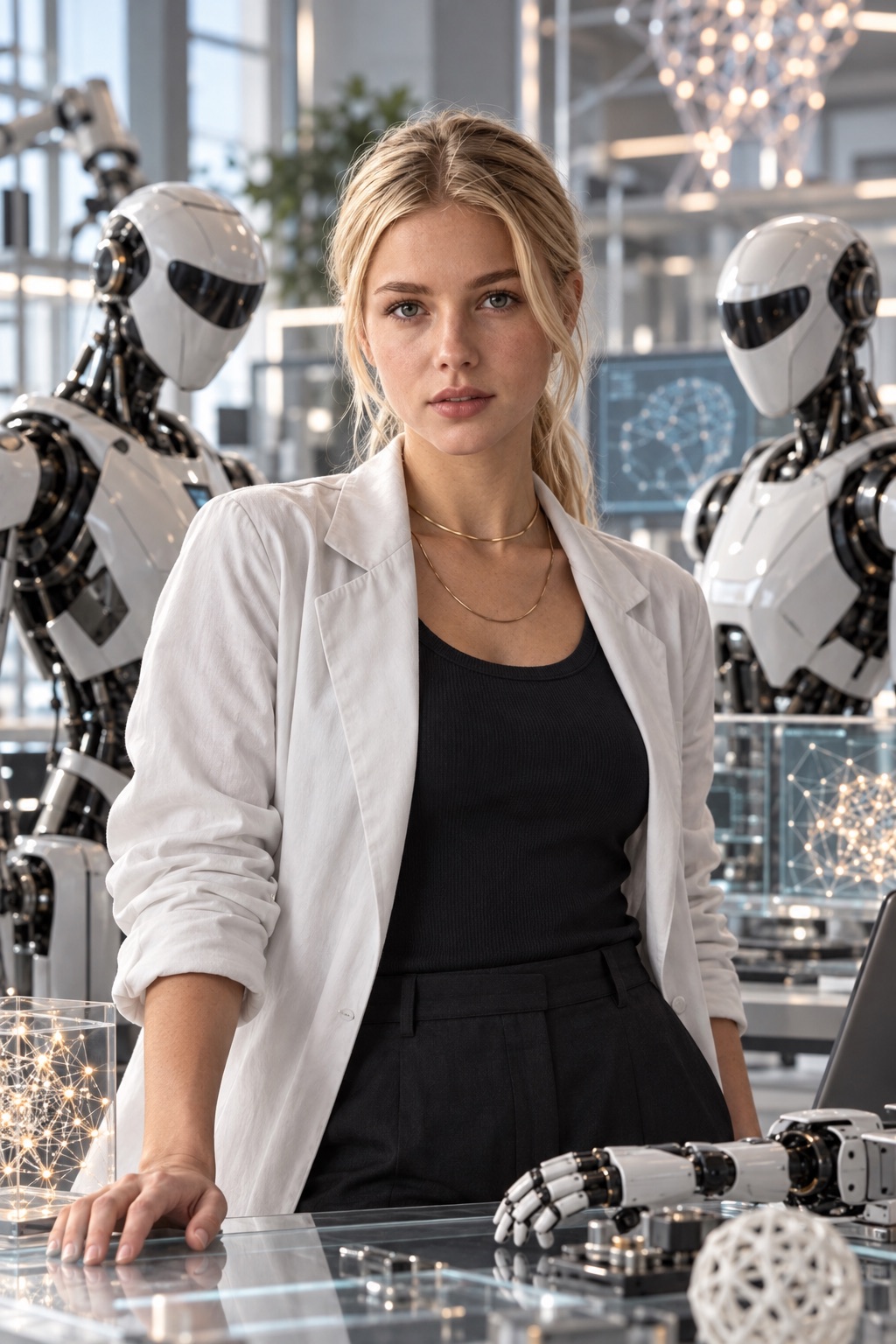
Use the uploaded portrait as the primary identity reference. Preserve the adult subject's recognisable facial structure, natural proportions, skin texture, eye character, hairstyle cues, and human expression while changing the setting, outfit, and lighting.
Create an ultra-photorealistic cinematic image of the subject collaborating with advanced humanoid robots in a calm future AI research atelier. The space should include transparent worktables, articulated service robots, neural-light sculptures, soft robotics components, glass partitions, and clean architectural depth.
Wardrobe should make the subject feel like the lead AI systems designer: an unbranded lab jacket or structured technical overshirt over practical dark clothing, realistic fabric, no visible company marks, no logos, and no costume styling.
Use photoreal science-fiction editorial cinematography: medium portrait, face clearly visible, 40mm lens, subject in the foreground, robots slightly behind and off-axis, believable lens falloff, realistic reflections on glass, and natural skin texture.
Lighting should be soft studio-lab daylight with subtle rim light, warm human skin tone, restrained luminous AI interfaces without readable text, and small highlights on porcelain and brushed titanium surfaces.
The finished image must feel like a real premium film still or editorial photograph about future AI design, not a product advertisement, not concept art, and not obviously AI-generated.
Avoid: text, logos, watermarks, insignia, robot brand labels, readable UI, copied source marks, plastic skin, glowing eyes, mannequin faces, distorted hands, extra fingers, duplicated limbs, random neon, and cluttered technology.